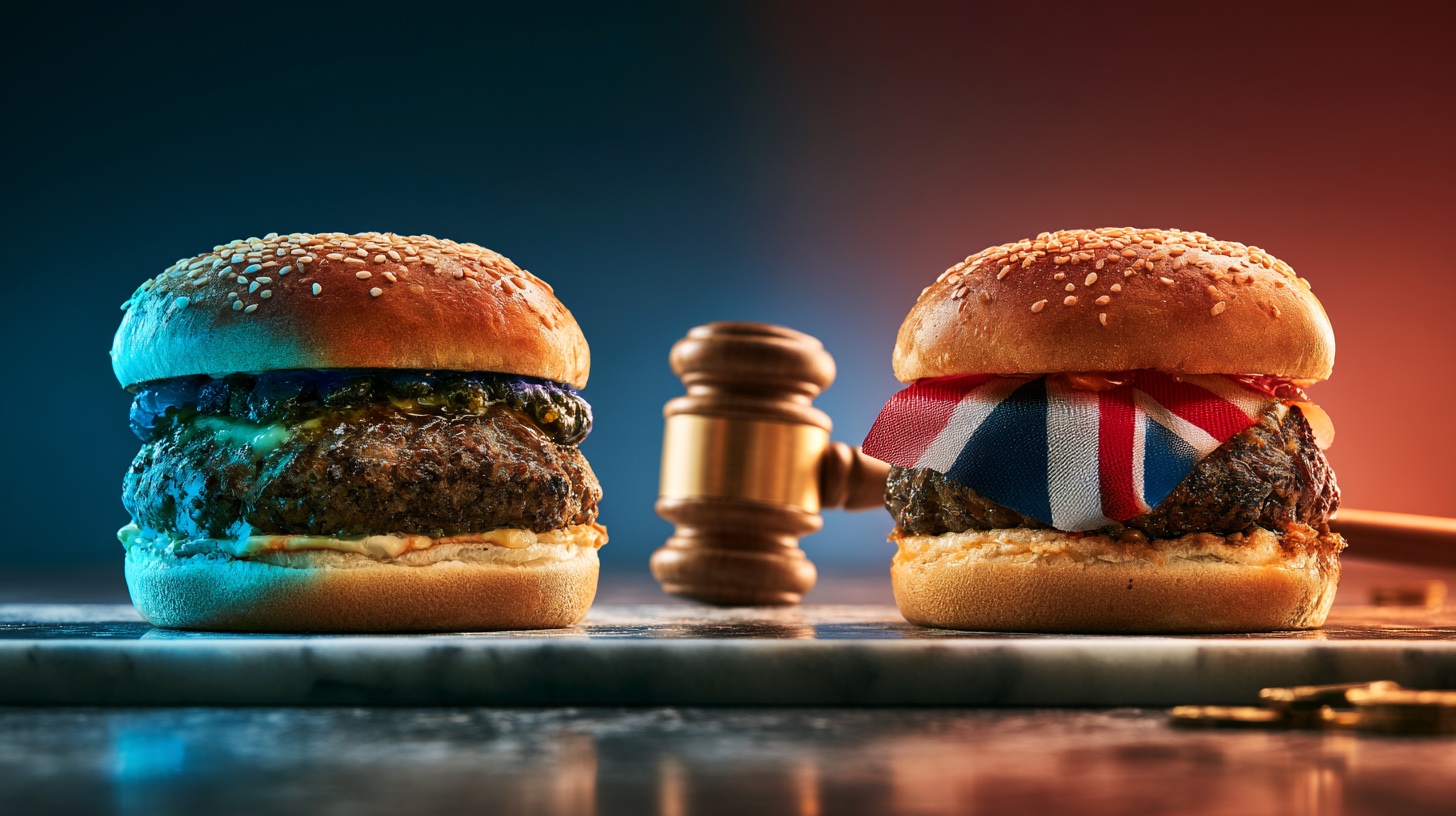
Same name, same logo, opposite answers: what Supermac's v McDonald's teaches every UK business
Pat McDonagh opened his first restaurant in Ballinasloe, County Galway, in 1978. Forty-eight years later, his company Supermac's is the largest Irish-owned fast food chain in Ireland, and he has spent nineteen of those years in trademark proceedings against McDonald's.
On 7 August 2026, the UK Intellectual Property Office handed him a win. Supermac's can register its name and logo as UK trade marks. McDonald's had opposed, citing its existing UK rights including Big Mac and McCafé. The UKIPO found the marks had significant visual, aural and conceptual differences, that the Mc and Mac elements were "sufficient for a consumer not to directly confuse the marks", and that despite McDonald's substantial reputation, "no link will be made by the average consumer".
Six weeks earlier, the EU Intellectual Property Office looked at the same brand against the same opponent and decided the opposite. In June, its Board of Appeal upheld the refusal of Supermac's EU application, finding a likelihood of confusion with Big Mac for English and German speaking consumers.
Same name. Same logo. Same opponent. Two registers, two opposite answers, six weeks apart.
How a chip shop ended up fighting McDonald's for nineteen years
The fight started in 2007, when Supermac's first tried to register its name in the EU with a view to expanding into Europe. McDonald's opposed, arguing the name was too close to Big Mac. By 2016 Supermac's had won the right to register its restaurant name but not many of its food and drink items, and filed a fresh EU application in May 2016. McDonald's opposed again.
Then McDonagh did something most small businesses never think to do. He attacked back.
In 2017, Supermac's applied to revoke the Big Mac trademark itself, arguing McDonald's had not put it to genuine use across everything it was registered for, and accusing the company of "trademark intimidation, registering brand names that are simply set aside to be used against future competitors".
It worked. In June 2024, the EU General Court found McDonald's had not proved genuine use of Big Mac for chicken sandwiches, foods prepared from poultry, or restaurant services. The best-known burger name on the planet lost part of its own registration because the evidence file was thin. McDonald's kept Big Mac for beef burgers, the product that made the name, and lost the rest.

Why two offices reached opposite answers
Nothing went wrong in either building. The UKIPO and EUIPO applied similar legal tests to different markets, different consumer perceptions and different evidence, and each is entitled to its own answer. The EU board found the signs similar to a below-average degree visually and phonetically, and that was enough given Big Mac's fame. The UK office found the differences did the work.
Since Brexit, that independence has teeth. A UK registration gives you nothing in the EU. An EU registration gives you nothing in the UK. An opposition won in one register can be lost in the other, on the same facts, in the same summer. Supermac's now holds the keys to the British market and remains locked out of EU-wide registration, and both outcomes are correct in their own systems.
If your business trades, or plans to trade, on both sides of that line, you are running two separate campaigns. Filing, watching and defending happen per register, not per brand.
Three lessons worth more than the headlines
Registered does not mean protected forever. The Big Mac revocation is the part of this story every brand owner should sit with. McDonald's held the registration for decades. When challenged to prove genuine use across its scope, the evidence was not there, and the scope shrank. UK law works the same way: after five years, any registration can be attacked for non-use, and broad, unused specifications are the soft target. Keeping dated evidence of your mark in use, invoices, dated screenshots, packaging, is not paperwork for its own sake. It is the ammunition your registration runs on the day someone tests it.
Size does not decide oppositions. Evidence does. McDonagh put it plainly: "We've never had their scale or resources, but we've always believed every business deserves the same protection under the law, regardless of its size." He is right, and the record proves it in both directions. A family chain from Galway partially revoked one of the most famous marks on Earth, then out-argued its owner at the UKIPO. Trademark offices read evidence, not balance sheets.
None of this works if you find out late. Every stage of this nineteen-year story ran on someone noticing a filing and acting inside a window. McDonald's could oppose Supermac's applications because it watches the registers relentlessly, in every jurisdiction, every week. Most small businesses have no idea a conflicting application has been filed until the two-month UK opposition window is long gone, and challenging a registered mark afterwards costs thousands where an opposition would have cost hundreds. The multinationals' real advantage was never the legal budget. It was knowing in time.
What to do with this
You do not need nineteen years and a legal team. You need three habits: check the register before you commit to a name, keep dated evidence that you use your mark, and watch new filings so a conflict reaches you while the cheap options are still open. The first one takes sixty seconds - run your brand through our free check at tmguard.uk/check and see what the register already says about your name. From £99 a year, TMGuard watches every new UK filing against your brand and counts down your opposition window when something appears.
Pat McDonagh spent nineteen years proving a small business can hold its ground. The quieter lesson is that the fight is decided by who is paying attention.
Not legal advice. Not privileged. TMGuard is not a law firm.